Sayfe.Space
An online therapy platform that connects people directly with counsellors, and lets counsellors apply to join.
- Role
- Naming, brand identity, UX and UI design
- Year
- 2023
- Client
- Rabia Khalid and Fatima Sarmad, psychologists
- Status
- Live, now offline
- Tools
- Figma
The brief
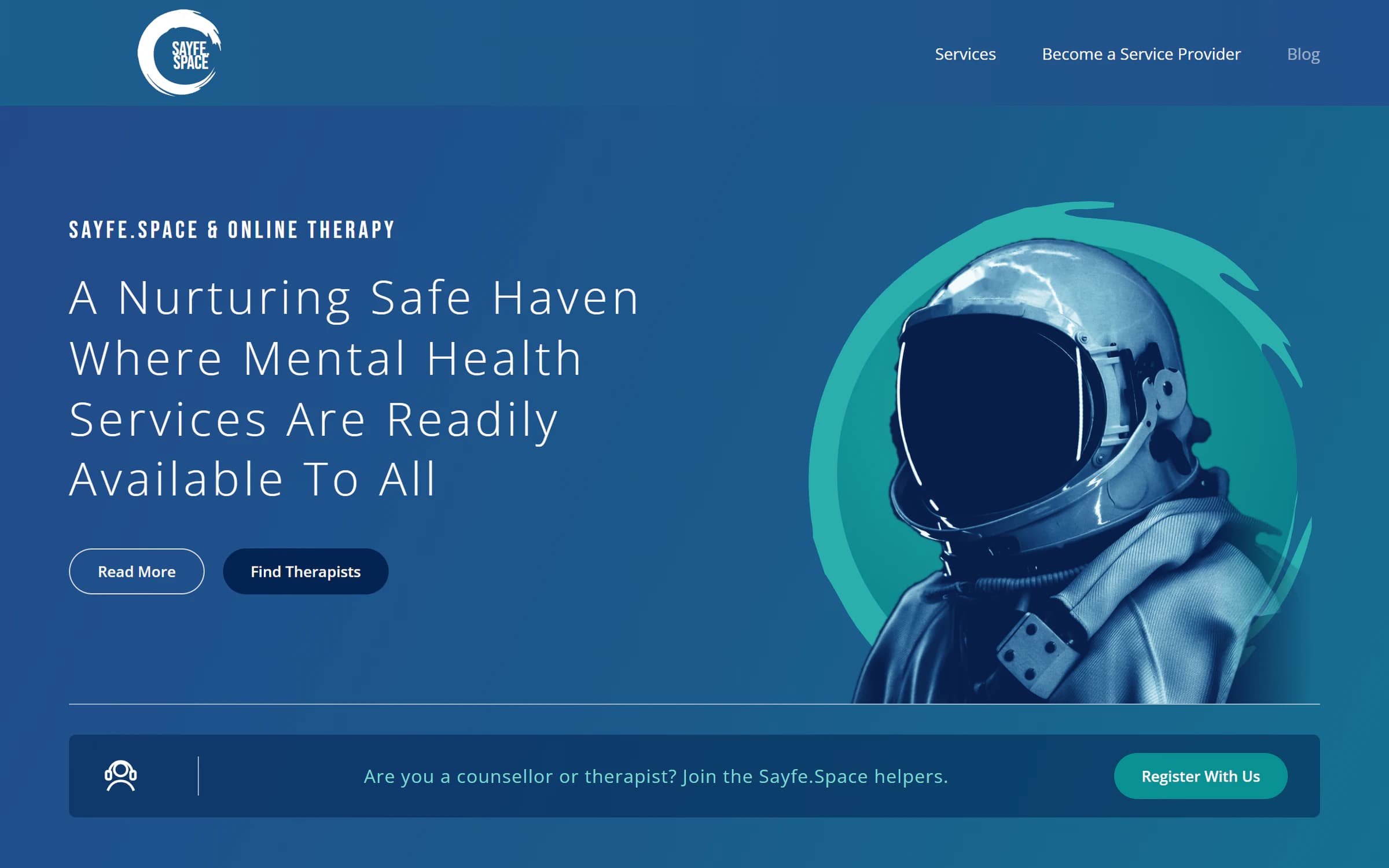
The client wanted to revamp their platform with an identity that felt inviting and safe, where people could connect directly with therapists. Their vision was a nurturing safe haven, where mental health services are available to anyone, whoever and wherever they are.
Name and identity
After learning about their vision and the brand they imagined, I named it Sayfe.Space, with the line “Say your mind”.
- 1The brush stroke circle stands for a nurturing environment.
- 2The free stroke stands for expressing yourself without judgement.
- 3Bebas Neue, because its compact letter spacing feels cosy.
The people who come to Sayfe.Space for help are its astronauts.
- 1The astronaut is the platform’s symbol: anyone can be inside the suit, floating contentedly in their own space.
- 2The home page invites guests to explore the holistic universe of therapeutic options.
Finding the right counsellor
The list of counsellors could run into hundreds, and everyone has a specific need. A filter panel lets people narrow by price, location, gender, who the session is for, and type of service.
- 1The filter focuses on the pain point, so guests can narrow down to what caters to their needs.
- 2Each card shows a counsellor’s speciality, languages and price, so guests can compare before opening a profile.
Counsellor profiles
A lot of information, split into clear sections so people can choose with confidence.
- 1Because of the nature of the work, a lot of information is shown, segmented into sections to help guests choose a counsellor.
- 2Guests can message a counsellor before they book.
Joining as a counsellor
The vetting questionnaire is mostly checkboxes, so counsellors can apply quickly without writing long answers.
- 1To keep it from draining energy, counsellors check the boxes that apply and save time.
- 2Record and safeguarding checks sit in the same form, so counsellors are vetted and onboarded in one place.
Blogs and videos
Counsellors publish guidance on topics like preparing for adversity, healing yourself and accepting happiness, which also helps the site get found in search.
Outcome
Sayfe.Space launched, and has since been taken offline.